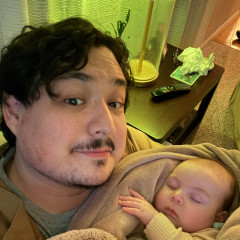
I’m Sean Thompson, an economist with the City of Seattle’s Office of Economic and Revenue Forecasts. My work is building the production models that forecast the revenue streams the city budgets against — property taxes, private utility taxes, and related sources. The residuals is where I write about that work in public, and about forecasting and applied econometrics more broadly.
What I work on
Most of my time sits at the intersection of classical time-series econometrics and machine learning. Recent projects include a LightGBM pipeline that forecasts assessed value at the individual parcel level across Seattle’s roughly 250,000 parcels, ARDL and VECM models for the Seattle and King County housing market using NWMLS data, and natural gas and steam utility tax forecasts built in EViews. I care about the parts of the work that don’t make it into papers: reconciling model outputs to certified figures, building pipelines that rerun cleanly when inputs shift, and writing down assumptions so the next economist can pick the work up cold.
My toolkit is R and RStudio for most new work, EViews for the long-running utility tax forecasts, Python for ML-heavy pieces, SQL for everything upstream, and Power BI and Excel for the parts that need to land on a colleague’s desk in a form they can open.
The methods conversation is easy. The “how do you actually ship this on a deadline” conversation is harder and more interesting.
Why this blog
The municipal revenue forecasting world is small and most of its work is internal. That’s mostly appropriate — forecasts move real money and shouldn’t be half-baked in public — but it means the methods and tradeoffs rarely get written up where other practitioners can learn from them. The residuals is my attempt to write some of that down. When a model works, I try to explain why. When it doesn’t, I try to explain that too. The posts aren’t comprehensive; they’re the things I’d have wanted to read when I was starting.
Credentials
I hold two NABE certifications: the Certificate in Time-Series Analysis and Forecasting (2025) and the Certificate in Machine Learning and Data Science for Economists (2025). I’ve graduated from the University of Washington, with a Bachelor of Science in Economics with departmental honors.
Views here are my own and not the City of Seattle’s.
Elsewhere
The easiest way to reach me is the contact page or LinkedIn. Outside of work I volunteer as a delivery driver at the University District Food Bank and do a lot of bouldering.